English
Welcome to Umma University
Fostering Knowledge and Innovation
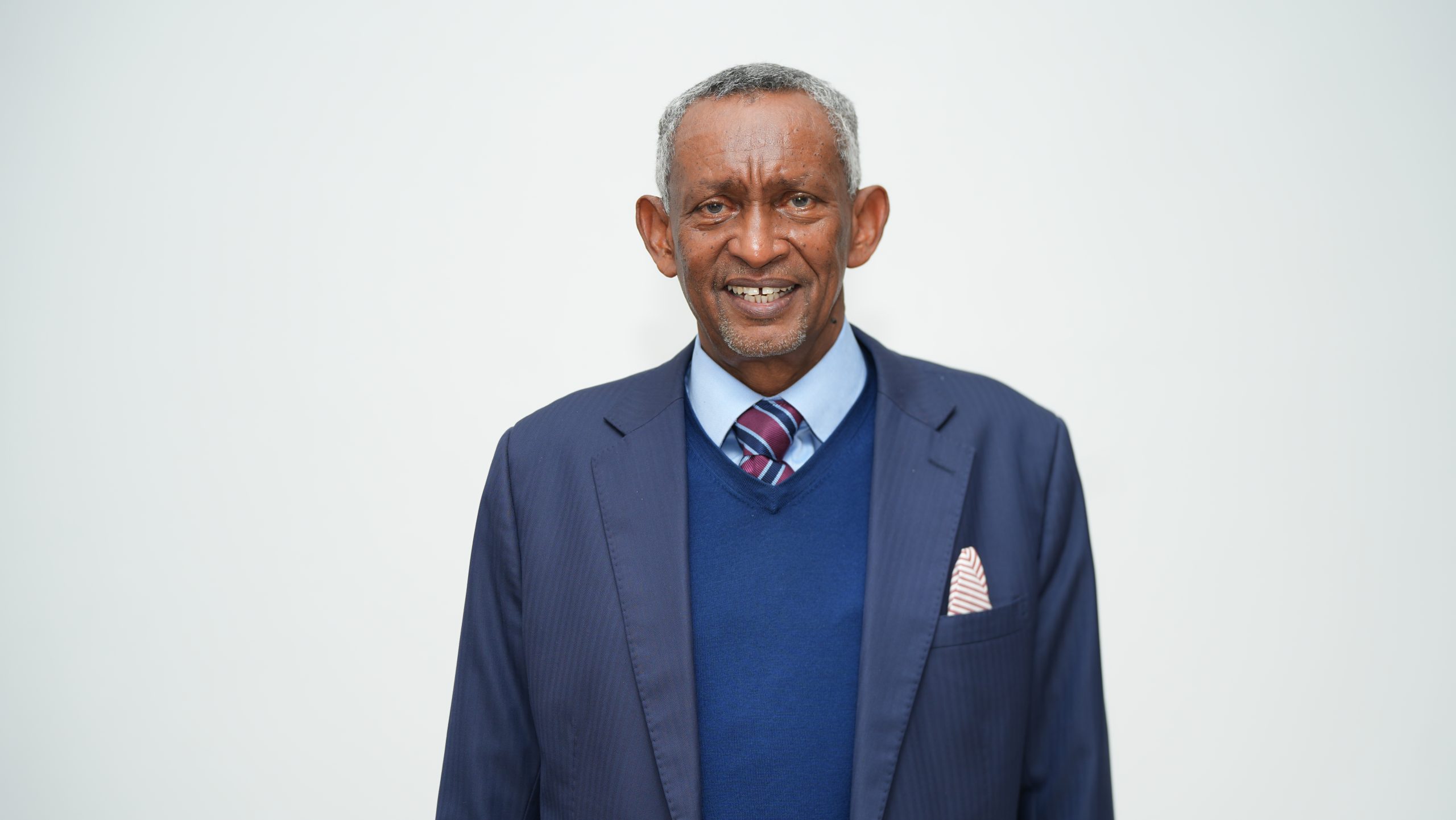
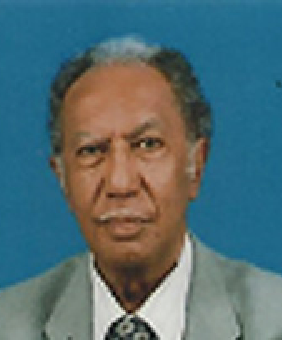
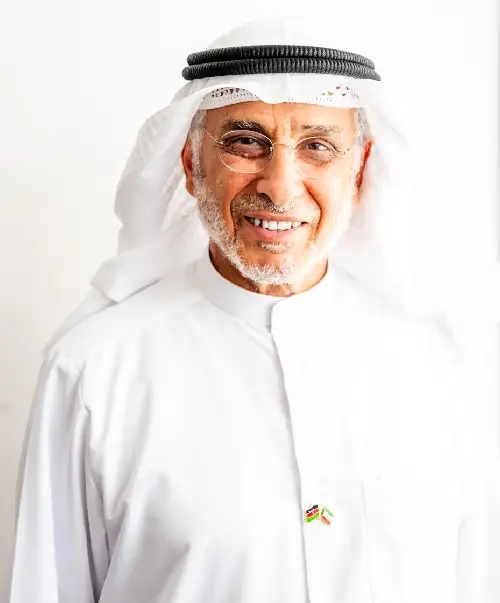
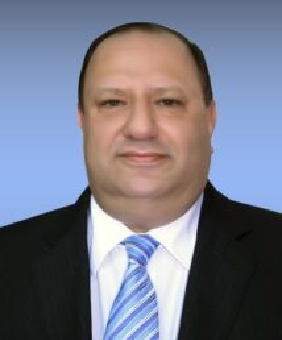
Amb. (Eng.) Mahboub is an innovative civil servant with over four decades of experience. He holds a BSc. and MSc. in Civil Engineering from Texas A&M University. His career progressed from Field Engineer to Director, before entering the public sector where he served as Permanent Secretary in both the Office of the Kenyan President and the Ministry of Water and Irrigation.
He subsequently served as Executive Secretary of IGAD for 11 years, leading key initiatives including the 2012 IGAD Drought Resilience and Sustainability Initiative (IDDRSI) and overseeing the South Sudan mediation process that resulted in a landmark peace agreement, alongside conflict resolution efforts in Ethiopia and Somalia.
His expertise spans disaster management, arid lands development, institutional building, and political diplomacy. He is a recipient of several honors, including Kenya’s Order of Grand Warrior (OGW), Chief of Burning Spear (CBS), and Djibouti’s Hero of Independence (HoA).
Following IGAD, he served as Chairman of Kenya Power and Lighting Board and Chairman of Council at Jomo Kenyatta University of Agriculture and Technology. He currently chairs the Equalisation Fund Advisory Board at the National Treasury, while continuing to mentor and speak at conferences worldwide.
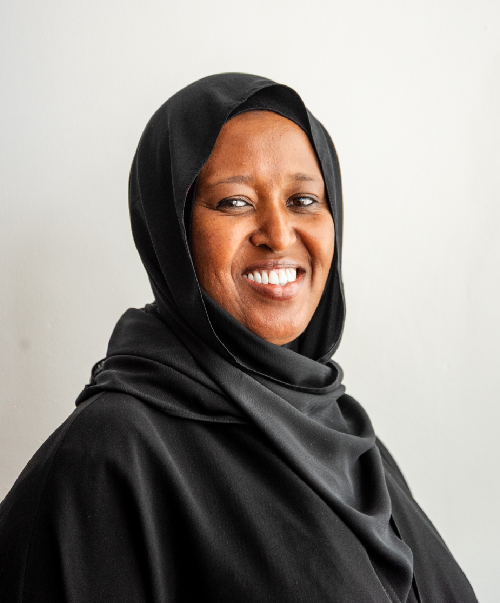
Education is more than the pursuit of academic excellence at Umma University—it is a sacred responsibility to nurture character, leadership, and service to humanity. Since our founding, we have remained committed to integrating Islamic moral values with rigorous academic programs, producing graduates who embody both professional competence and ethical integrity.
As the first Islamic faith-based chartered private university in Kenya, we are proud of our growth and impact: a vibrant community of learners from across Africa, expanding academic programs in science, technology, health, law, and business, and a record of alumni who are leaders in their fields.
Looking ahead, we are investing in bold initiatives that reimagine the future of learning—expanding global partnerships, embracing digital innovation, and embedding sustainability into every aspect of university life. We see education not just as a transfer of knowledge, but as an evolving journey that equips learners with adaptability, creativity, and values to thrive in an ever-changing world. These efforts reaffirm our belief that true education should go beyond informing minds to transforming societies.
Our students, faculty, partners, and friends welcome you to walk with us as we continue to foster knowledge and innovation for the benefit of our nation and the wider world.
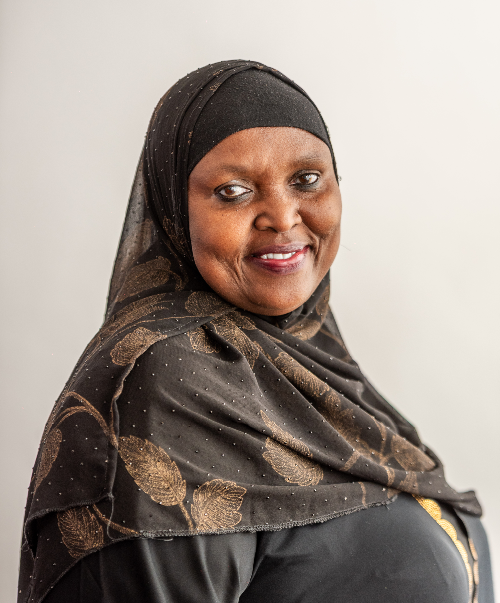
Dr. Halima Saado Abdillahi
Vice Chancellor, Umma University

Got Questions? Call us
+254 746 790 207
WhatsApp +254 703969000
Garissa:+254 746 790 207
Box 713-01100, Kajiado, Kenya.
Kajiado
WhatsApp us
Umma University
We firmly believe that the internet should be available and accessible to anyone, and are committed to providing a website that is accessible to the widest possible audience, regardless of circumstance and ability.
To fulfill this, we aim to adhere as strictly as possible to the World Wide Web Consortium’s (W3C) Web Content Accessibility Guidelines 2.1 (WCAG 2.1) at the AA level. These guidelines explain how to make web content accessible to people with a wide array of disabilities. Complying with those guidelines helps us ensure that the website is accessible to all people: blind people, people with motor impairments, visual impairment, cognitive disabilities, and more.
This website utilizes various technologies that are meant to make it as accessible as possible at all times. We utilize an accessibility interface that allows persons with specific disabilities to adjust the website’s UI (user interface) and design it to their personal needs.
Additionally, the website utilizes an AI-based application that runs in the background and optimizes its accessibility level constantly. This application remediates the website’s HTML, adapts Its functionality and behavior for screen-readers used by the blind users, and for keyboard functions used by individuals with motor impairments.
If you’ve found a malfunction or have ideas for improvement, we’ll be happy to hear from you. You can reach out to the website’s operators by using the following email
Our website implements the ARIA attributes (Accessible Rich Internet Applications) technique, alongside various different behavioral changes, to ensure blind users visiting with screen-readers are able to read, comprehend, and enjoy the website’s functions. As soon as a user with a screen-reader enters your site, they immediately receive a prompt to enter the Screen-Reader Profile so they can browse and operate your site effectively. Here’s how our website covers some of the most important screen-reader requirements, alongside console screenshots of code examples:
Screen-reader optimization: we run a background process that learns the website’s components from top to bottom, to ensure ongoing compliance even when updating the website. In this process, we provide screen-readers with meaningful data using the ARIA set of attributes. For example, we provide accurate form labels; descriptions for actionable icons (social media icons, search icons, cart icons, etc.); validation guidance for form inputs; element roles such as buttons, menus, modal dialogues (popups), and others. Additionally, the background process scans all the website’s images and provides an accurate and meaningful image-object-recognition-based description as an ALT (alternate text) tag for images that are not described. It will also extract texts that are embedded within the image, using an OCR (optical character recognition) technology. To turn on screen-reader adjustments at any time, users need only to press the Alt+1 keyboard combination. Screen-reader users also get automatic announcements to turn the Screen-reader mode on as soon as they enter the website.
These adjustments are compatible with all popular screen readers, including JAWS and NVDA.
Keyboard navigation optimization: The background process also adjusts the website’s HTML, and adds various behaviors using JavaScript code to make the website operable by the keyboard. This includes the ability to navigate the website using the Tab and Shift+Tab keys, operate dropdowns with the arrow keys, close them with Esc, trigger buttons and links using the Enter key, navigate between radio and checkbox elements using the arrow keys, and fill them in with the Spacebar or Enter key.Additionally, keyboard users will find quick-navigation and content-skip menus, available at any time by clicking Alt+1, or as the first elements of the site while navigating with the keyboard. The background process also handles triggered popups by moving the keyboard focus towards them as soon as they appear, and not allow the focus drift outside it.
Users can also use shortcuts such as “M” (menus), “H” (headings), “F” (forms), “B” (buttons), and “G” (graphics) to jump to specific elements.
We aim to support the widest array of browsers and assistive technologies as possible, so our users can choose the best fitting tools for them, with as few limitations as possible. Therefore, we have worked very hard to be able to support all major systems that comprise over 95% of the user market share including Google Chrome, Mozilla Firefox, Apple Safari, Opera and Microsoft Edge, JAWS and NVDA (screen readers).
Despite our very best efforts to allow anybody to adjust the website to their needs. There may still be pages or sections that are not fully accessible, are in the process of becoming accessible, or are lacking an adequate technological solution to make them accessible. Still, we are continually improving our accessibility, adding, updating and improving its options and features, and developing and adopting new technologies. All this is meant to reach the optimal level of accessibility, following technological advancements. For any assistance, please reach out to